
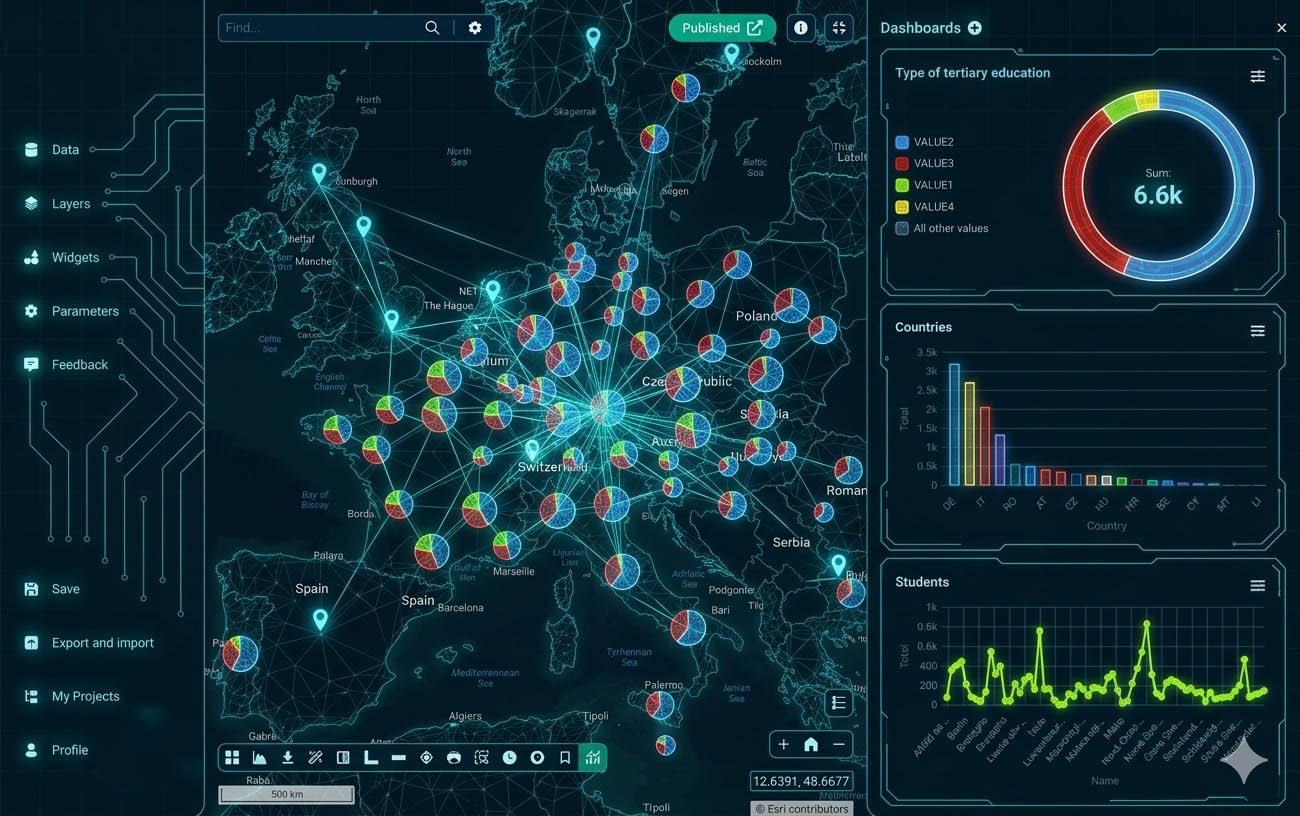
In today’s data-driven economy, location is one of the most valuable dimensions of information. Whether businesses are managing fleets, optimizing deliveries, analyzing customer behavior, or building digital platforms, understanding where things happen can unlock powerful insights.
Location intelligence combines mapping, geospatial analytics, and real-time data to help organizations make smarter operational and strategic decisions. For companies across logistics, retail, mobility, and technology, it is quickly becoming a competitive advantage rather than a nice-to-have feature.
What Is Location Intelligence?
Location intelligence refers to the process of analyzing and visualizing data using geographic context. By adding location data to existing datasets, organizations can uncover patterns that would otherwise remain hidden.
Typical components include:
-
Interactive maps
-
Geocoding and reverse geocoding
-
Route optimization and navigation
-
Geospatial analytics
-
Real-time traffic and mobility data
-
Points of Interest (POI) datasets
When these tools are combined with business data—such as customer locations, assets, or operational metrics—organizations can make better decisions faster.
Key Use Cases Across Industries
Logistics and Fleet Management
Logistics companies rely heavily on accurate location data. Modern mapping platforms allow organizations to:
-
Optimize delivery routes in real time
-
Reduce fuel consumption and operational costs
-
Avoid traffic congestion and road restrictions
-
Improve delivery time predictions
-
Enhance driver safety
With the rise of e-commerce and same-day delivery, efficient last-mile logistics has become critical. Location intelligence helps companies meet customer expectations while maintaining profitability.
Mobility and Transportation Platforms
Mobility platforms—from ride-hailing services to multimodal transportation apps—depend on reliable mapping and location data.
Location technologies enable:
-
Turn-by-turn navigation
-
Accurate pickup and drop-off points
-
Dynamic route recalculation
-
Traffic-aware travel times
-
Integration with public transportation data
As cities become more connected and mobility services expand, location intelligence will continue to power the digital infrastructure behind urban transportation.
Retailers use location intelligence to better understand where customers are and how they behave.
Applications include:
-
Store location planning
-
Market expansion analysis
-
Customer segmentation by geography
-
Catchment area analysis
-
Competitor mapping
By combining location data with demographic insights, businesses can identify high-potential markets and underserved regions.
Why Location Data Quality Matters
Not all maps and location datasets are created equal. Businesses depend on high-quality, frequently updated mapping data to ensure their applications and operations remain accurate.
Important factors include:
-
Global map coverage
-
Regular updates and road changes
-
Traffic and mobility data accuracy
-
Developer-friendly APIs and SDKs
-
Scalability for enterprise applications
Poor data quality can lead to incorrect routes, inaccurate ETAs, and poor user experiences—making data reliability a critical consideration.
The Role of APIs and Developer Platforms
Modern location platforms provide powerful APIs and SDKs that allow developers to integrate mapping capabilities directly into applications.
Common features include:
-
Map rendering and customization
-
Geocoding services
-
Routing and navigation APIs
-
Traffic data integration
-
Geospatial search and POI services
These tools enable organizations to build custom location-enabled solutions tailored to their specific workflows and industries.
The Future of Location Intelligence
The next generation of location technology will be shaped by:
-
Real-time data streams
-
AI-driven route optimization
-
Digital twins of cities
-
Connected and autonomous vehicles
-
Advanced geospatial analytics
As more devices become connected and cities generate larger datasets, location intelligence will play an even bigger role in helping organizations interpret complex environments.
Conclusion
Location intelligence is transforming how organizations operate, compete, and innovate. By combining accurate mapping data, powerful APIs, and advanced analytics, businesses can gain a deeper understanding of their operations and customers.
Companies that successfully integrate location intelligence into their digital platforms will be better positioned to optimize operations, improve customer experiences, and unlock new business opportunities.